

Preventable maternal deaths remain a global injustice rooted in gender inequality and systemic failure, with advocates like Angela Nguku urging a human rights-based approach to ensure no woman dies while giving life.
Human Rights
Danielle Bell explains why documenting human rights in Ukraine’s conflict is crucial for justice and accountability amid ongoing violence.
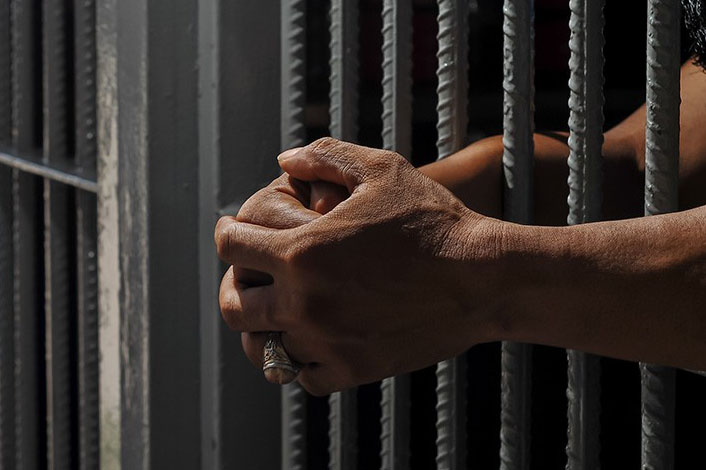
Global experts and formerly incarcerated individuals emphasize that successful reintegration after prison requires addressing stigma, ensuring access to basic rights, and treating support not as charity, but as a fundamental human right.

For this year's International Day for People of African Descent (31 August), the United Nations Secretary-General's message emphasizes honoring the remarkable contributions of individuals of African descent, while acknowledging the lasting injustices they have faced through slavery and colonialism. As we enter the Second International Decade for People of African Descent (1 January 2025 – 31 December 2034), the theme "People of African Descent: Recognition, Justice, and Development" highlights the importance of affirming their rights and celebrating their impact.

Enforced disappearance is often used as a strategy to instill fear in society. The resulting sense of insecurity affects not only the close relatives of the disappeared, but also their communities and society at large. In 2010, the General Assembly adopted the International Convention for the Protection of All Persons from Enforced Disappearance to prevent this grave human rights violation and combat impunity. On the International Day of the Victims of Enforced Disappearances (August 30), the UN notes that only 77 Member States have ratified the Convention.
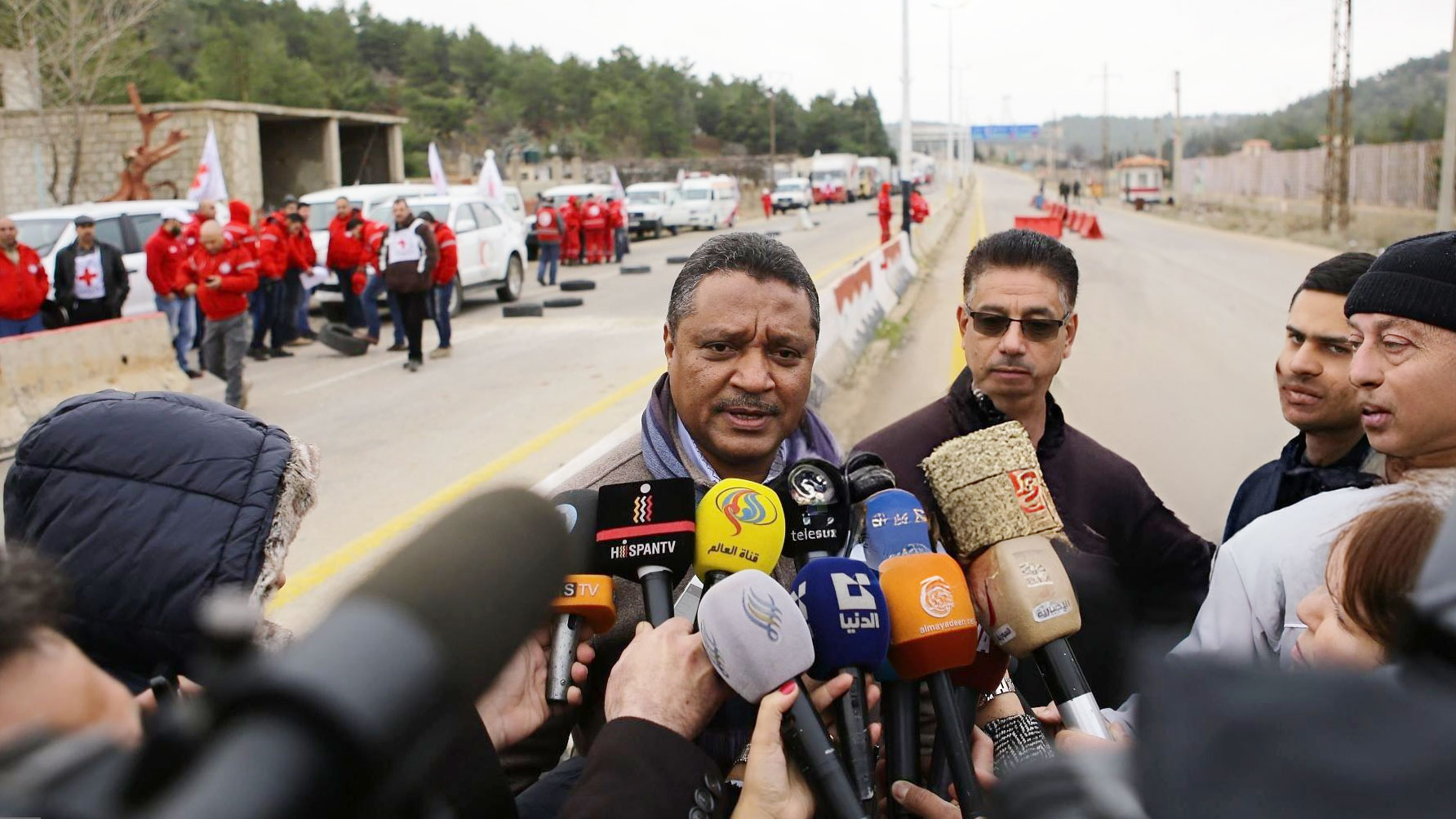
“[Serving refugees] is not a job, it's a mission, and there's always fire in the belly that keeps you wanting to do more, but also never giving up. This is the UNHCR I joined.”
Yacoub El Hillo spent more than thirty years serving refugees and displaced people in some of the world’s worst conflict zones. But when cataclysmic war erupted in his hometown of Khartoum, Sudan, the Regional Director for Africa at the United Nations Development Coordination Office (DCO) had to help his own family flee the violence.
“I don't think there's any home in Khartoum that was spared … the assumption is that everything is gone.”
Having served in more than 16 duty stations, from Liberia to Syria, Somalia and Afghanistan, Yacoub El Hillo has rarely seen any conflict as devastating as the one currently decimating Sudan. In this episode, he reflects on the scale of the human suffering there, looks back on a rich and varied career with the UN, and shares why all nations deserve a chance to strive for a brighter future.
Photo: ©OCHA Syria

Across the globe, people continue to be harassed, attacked — and even killed — simply for what they believe. Places of worship are desecrated. Communities are terrorized. Online platforms are flooded with hate. We must confront this threat head-on. On this International Day Commemorating the Victims of Acts of Violence Based on Religion or Belief (22 August) we remember the victims and recommit to action. Let us stand together to build a world where diversity is celebrated, and everyone can live in safety and dignity.

“You know, what am I doing every day for human beings, particularly those who are in, you know, a much more challenging situation, we need to support their courage, their resilience, their need to survive...and their rights.”
With her background in human rights law, Georgette Gagnon was once said to represent the conscience of war. Currently serving as the Secretary-General’s Deputy Special Representative for Afghanistan, she has been devastated by the sweeping loss of rights for women and girls there.
“You used to see across the country hundreds of girls going to school... Now, of course, you don't see that, and it's heartbreaking. It's such a huge loss for the entire society,” she says.
Afghanistan has one of the highest numbers of people in need of humanitarian support, and drastic cuts to humanitarian assistance affect access to critical care for millions. In this episode, Georgette Gagnon shares her hopes and fears for a country close to her heart, and reflects on a career serving in some of the world’s toughest places, from Syria to Sudan and Libya.
Photo: ©UN photo/UNAMA/Tahmina Osta

A group of 45 young human rights advocates from all over the world gathered recently in Geneva for a Youth Rights Academy. They emphasized the importance of knowing their rights to create real change, with speakers like Avril Murillo from Bolivia and Yara Al-Zinati from Gaza highlighting how young people understand the urgency of the situation today. The Academy was set up through a partnership between UN Human Rights and Qatar’s Education Above All, focusing on empowering youth, especially in conflict zones. They previously launched a Youth Advocacy Toolkit to help with this mission. During the Academy, participants engaged in workshops covering various topics such as international law, education rights, the climate crisis, and how to use social media for advocacy.

Despite progress, millions of children lack birth certificates, but inclusive universal digital registration systems could bridge the gap and uphold their rights.
Scams are spreading rapidly with technology, leaving victims in ruin and driving a brutal underworld of trafficking and exploitation. Tackling this crisis requires exposing the criminal networks behind the lies and dismantling their operations.

As we mark the 2025 Nelson Mandela International Day, we re-wind and re-play an archive UN Radio programme by Ben Malor looking back at the struggle against apartheid and the campaign for Mandela's release in which the United Nations played an important role — archive special programme for the first commemorative Mandela Day in 2010. Photo:© UN Photo/Greg Kinch

Less buckets, more blankets: For years, Khawar lived in constant fear of the roof collapsing on her sleeping grandchildren. Widowed in 2015, the 66-year-old grandmother now supports a family of 12 – including her daughter, who struggles with mental illness, and her unemployed son. In Kabul’s crowded Dasht-e Barchi settlement, their shelter, like thousands of others in the settlement, had never been built to withstand the elements. Khawar and her family struggled through many a winters' leaks, sickness, and the haunting possibility of collapse. But she clung to a single wish: a safe home. Today, thanks to UN-Habitat’s Shelter Initiative with support from the Afghanistan Humanitarian Fund, that wish has finally come true marking not just the rebuilding of a fragile shelter, but the restoration of dignity and hope for a family determined to survive. Photo: Khawar (right) and Alina (left) sit inside their rehabilitated shelter in Dasht-e Barchi, Kabul, Afghanistan.
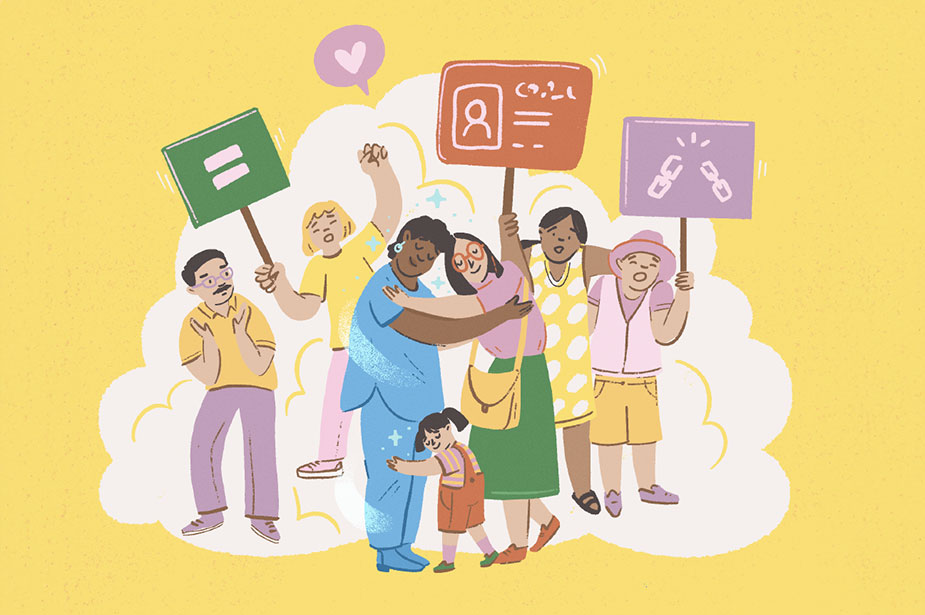
The comic strip from UN Human Rights, ‘A pathway to compassion,’ tells the story of Elizabeth and her struggle due to her insecure migration status and the power of solidarity. Illustrated by Magda Castría – Argentinian artist, feminist and activist – the comic is a reminder of how everyone can be part of demanding fairer systems and rules around migration. Elizabeth's community wanted to help her and others like her and demanded a fair migration system where everyone has a chance to live safely and securely.
This World Population Day, stand with United Nations Population Fund to ensure every woman and girl has the freedom to speak, choose, and control her own body.