

Fonio is an ancient West African cereal that is a staple food for many families in northern Ghana. It's versatile and, once boiled, can be consumed as couscous, porridge, or turned into flour for baking. It is a versatile crop that generations have relied on, for both food and livelihoods. Christabel Kwasi, a 29-year-old farmer, is eager to teach people across Ghana how to grow fonio and prepare dishes with it, so they can have food always. “Our grandparents were telling us, [in] our forefather's time there was a lot of hunger. So fonio is the type [where] if you don't even have money to buy chemicals [fertilisers], you can still farm it, feed on it”, Christabel recalls.
Agriculture and Food
IFAD is partnering with the Mobile Journalism Awards to offer a US$ 1,000 prize for the best film highlighting a compelling story about rural people and issues, with the winner also receiving the opportunity to present their film at the International Journalism Festival in Perugia in April 2025. Enter here!

Farmers in northeastern Croatia have been making a traditional dried sausage called Baranjski kulen for 120 years. It's seasoned with paprika, garlic, and white pepper, and has gained Protected Geographical Indication (PGI) status from the European Union, thanks to the efforts of the Food and Agriculture Organization of the United Nations (FAO), the European Bank for Reconstruction and Development, and the Croatian government. Today, this mark of quality helps producers make more money for their hard work and keep culinary traditions alive.

Ecuador is pioneering sustainable agriculture with innovative practices to enhance productivity while preserving its rich biodiversity and forest ecosystems. The United Nations Development Programme (UNDP) and Lavazza have teamed up to produce the world's first certified 'deforestation-free' coffee. The initiative aims to improve the quality of coffee beans and protect nature and forests, working with farmers in the 23 provinces bordering Ecuador's Amazon rainforest. The initiative is part of the PROAmazonía program, a government-led initiative supported by UNDP, which has restored 15,023 hectares of Amazonian land.

The transportation process, a critical point in fresh fruit and vegetable supply chains, contributes significantly to the 13 percent of the world’s food losses that occur between harvesting and retail. To address this challenge, we need to approach the whole system of transportation and come up with tailored solutions. The Food and Agriculture Organization of the United Nations (FAO) works to promote the development of organized transport systems critical for assuring the efficient transfer of perishable fresh produce from farms to markets with minimal food loss in low- and middle-income countries.

Many have heard of Cartagena, Colombia, renowned for its vibrant walled city, festive environment and its Palenqueras, colourfully dressed female fruit vendors carrying a bucket of produce on their heads. But Cartagena is only the tip of the much bigger Colombian state, or “department”, of Bolívar. Scattered throughout the territory about two hours south of Cartagena are small towns that border a network of marshlands. This intricate ecosystem of waterways and wetlands plays a vital role in the environment but has also served as a treacherous battleground during Colombia’s long-standing armed conflict.
FAO's latest Food Security and Nutrition report highlights that global food insecurity remains much higher than pre-COVID-19 pandemic levels. Understanding is crucial for the 2030 Sustainable Development Agenda's goal of leaving no one behind.
Some of the most innovative ways being used to improve agricultural practices involve nuclear technology. Nuclear applications in agriculture rely on the use of isotopes and radiation techniques to combat pests and diseases, increase crop production, protect land and water resources, ensure food safety and authenticity, and increase livestock production.

Among the lush and fertile lands in the northwestern region of the Islamic Republic of Iran, the Bactrian camels roam the area once again. The revival of this specific Iranian camelid species takes place in Ardabil city, a bustling capital surrounded by the Moghan plain. A symbol of Ardabil’s cultural heritage, these camels were facing the threat of extinction due to changing land use and the high cost and scarcity of fodder. The Food and Agriculture Organization of the United Nations (FAO) with the local Ministry of Agriculture - Jahad, embarked on a transformation of the camelid sector to tap into activities such as agritourism, livestock feed production, wool and milk processing.
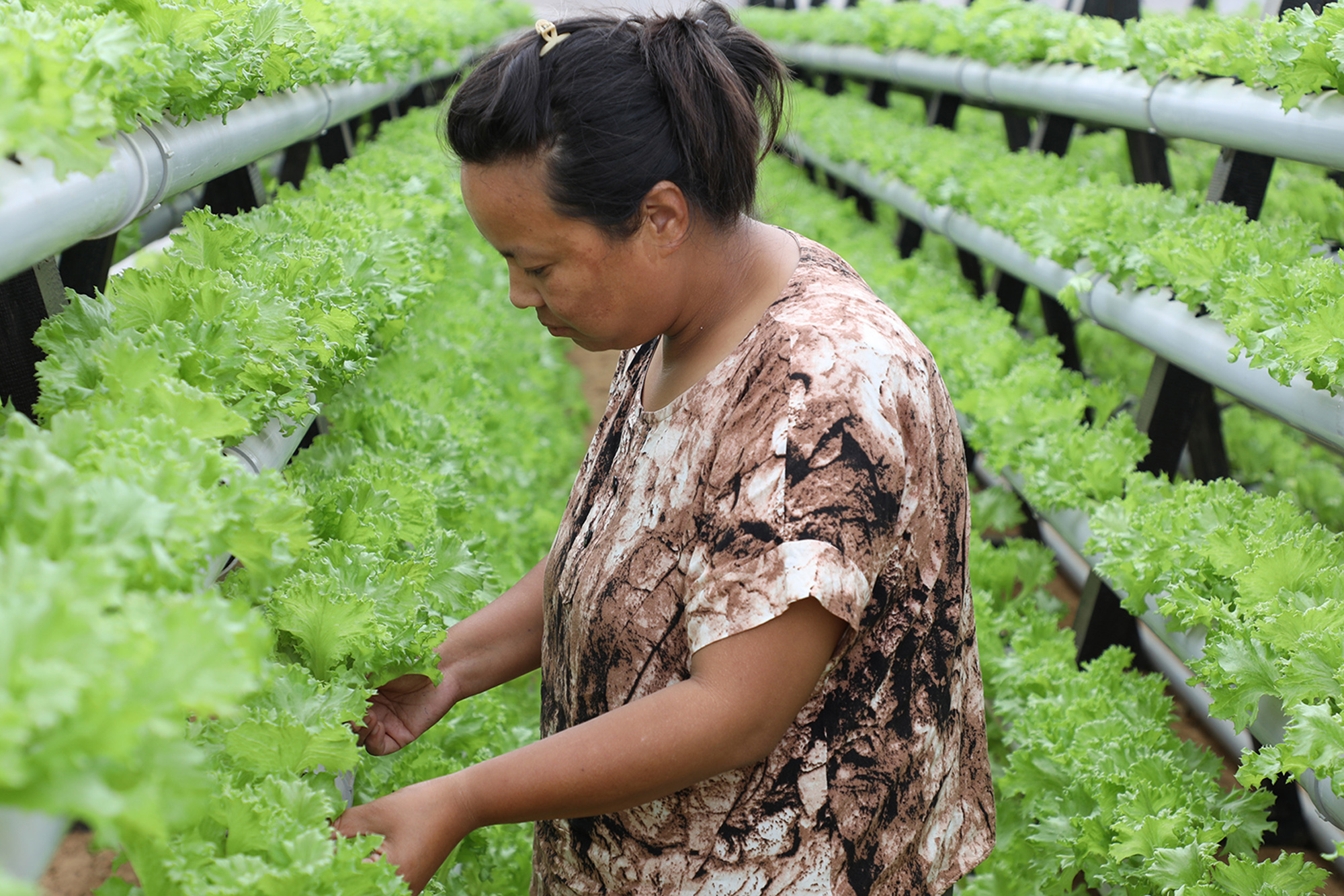
Kinley Wangmo, a Bhutanese mother, turned to hydroponics farming as a solution after losing her source of income during the COVID-19 pandemic. Her interest in hydroponics developed into a passion, leading her to establish Bhutan Hydroponics in 2020. Through her dedication and expertise, she received support from the Food and Agriculture Organization of the United Nations (FAO) for her urban farming project, which has helped her establish three spacious greenhouses.

Deep in his heart, La Xayyavieng has “always known that agriculture is the lifeline (…) to survive and to grow.” The 46-year-old father of three has long harboured the wish for his children to bring knowledge and experience back from neighbouring Vietnam to the family’s land in Attapeu province in the southeast of the Lao People’s Democratic Republic. La's participation in the "Building Climate-Resilient and Eco-friendly Agriculture Systems and Livelihoods" project implemented by the Food and Agriculture Organization of the United Nations (FAO) has led to a 160 percent increase in the family’s income through a successful watermelon crop. This change has successfully allowed La to grow vegetables in both the rainy and dry seasons.

Salma Akter Aduri’s family, potato farmers from Rangpur, Bangladesh, struggled to sell their cash crops at a profitable price. Facing dire circumstances, it looked like they would be forced to either give up their land or take high-interest loans from moneylenders, they joined the Birahim Farmer’s Cooperative, which received support through the Missing Middle Initiative. This initiative, implemented by the Food and Agriculture Organization of the United Nations (FAO) and funded by the Global Agriculture and Food Security Program (GAFSP), worked with farmers to improve access to finance, markets, technology, and information.
Salma Akter Aduri’s family, potato farmers from Rangpur, Bangladesh, struggled to sell their cash crops at a profitable price. Facing dire circumstances, it looked like they would be forced to either give up their land or take high-interest loans from moneylenders, they joined the Birahim Farmer’s Cooperative, which received support through the Missing Middle Initiative. This initiative, implemented by the Food and Agriculture Organization of the United Nations (FAO) and funded by the Global Agriculture and Food Security Program (GAFSP), worked with farmers to improve access to finance, markets, technology, and information.

Nirosha Dilmini has been harvesting eggplants since the crack of dawn on her small plot of land in the village of Tanamalvila in southeastern Sri Lanka’s Monaragala district. She’s been putting her efforts into farming here for six years now. But never has she had such a lucrative year as 2023. She attributes this transformation to the Good Agricultural Practices (GAP) programme implemented by the Food and Agriculture Organization of the United Nations (FAO). Nirosha is one of 645 Sri Lankan farmers across three districts who were trained under the programme and provided with equipment to modernize their farming practices.
Indigenous Peoples are essential to protecting and restoring the world's ecosystems and natural environment, that's why they need to be at the heart of planning and implementation of projects that affect them.